Oatstraw vs Milky Oats Tincture: What the Label Actually Means
Опубликовано: 24.06.2026
Oatstraw vs milky oats tincture is a label question before it is a botanical question. Many shoppers see Avena sativa, oatstraw, milky oats, dried tops, oat seed, or oat extract and assume these terms mean the same thing. They do not. They can point to different plant parts, harvest stages, and product formats.
This matters because you may think you are buying one type of oat-based herbal extract while the label describes another. Oatstraw usually refers to the stem and leaf portions of the oat plant. Milky oats usually refers to fresh oat tops harvested during the short “milky” stage. Oat seed or oat grain points to the mature seed. Secrets Of The Tribe treats this as a label clarity issue: the product name should match the plant part and preparation described on the bottle.
This guide explains the difference between oatstraw, milky oats, oat seed, dried tops, and Avena sativa tincture wording so you can read labels without guessing.
What Is the Difference Between Oatstraw and Milky Oats Tincture?
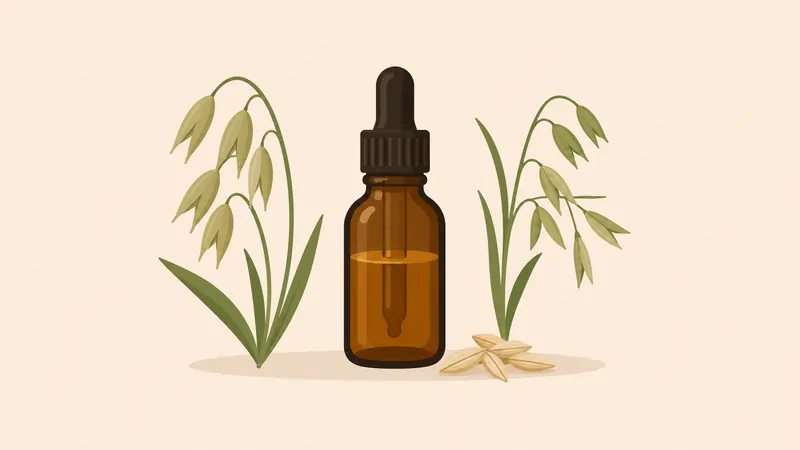
The main difference is plant part and harvest stage. Oatstraw usually means the dried aerial parts of the oat plant, often the stems and leaves. Milky oats usually means fresh oat tops harvested when the immature seed releases a white, milky fluid when pressed.
Both can come from Avena sativa. That is why the labels can look similar. But “same plant” does not mean “same material.” A tincture made from oatstraw is not automatically the same as a fresh milky oats tincture.
The short answer
Oatstraw tincture usually points to a dried aerial-part extract. Milky oats tincture usually points to fresh oat tops harvested at a specific early seed stage. Oat seed extract points closer to the mature seed or grain unless the label says otherwise.
If the label only says Avena sativa, check the plant part. The botanical name identifies the plant, but it does not tell you which part was used.
What Does Oatstraw Mean on a Tincture Label?
Oatstraw usually means the above-ground parts of the oat plant after the grain-bearing stage is not the main focus. In herbal product language, it often refers to the stem and leaf material used for teas, tinctures, and liquid extracts.
Labels may use terms such as oatstraw, oat straw, aerial parts, herb, dried tops, or Avena sativa herb. These terms are close, but not always identical. A careful label should say what part is extracted.
Common oatstraw label wording
You may see “Oatstraw extract,” “Avena sativa aerial parts,” “Avena sativa herb,” or “dried oat tops.” These phrases usually suggest that the product is not made primarily from mature oat grain.
Still, do not assume. “Dried tops” can mean different things across brands. If the product page and the bottle use different wording, ask the seller to clarify the plant part.
What Does Milky Oats Mean?
Milky oats refers to the fresh, immature oat tops harvested during a short stage before the seed fully hardens. When pressed at the right stage, the immature oat seed releases a milky white fluid. That is where the name comes from.
This stage is time-sensitive. It does not describe every oat top, every dried oat product, or every Avena sativa extract. It refers to a specific harvest window.
Fresh milky oats vs dried oat tops
Fresh milky oats are usually processed soon after harvest because the milky stage is brief. Dried oat tops may not represent the same fresh milky material unless the label clearly says they were harvested at that stage and then dried.
This is why “milky oats” is more specific than “oat tops.” If you want milky oats, look for that wording directly.
What Does Oat Seed or Oat Grain Mean?
Oat seed or oat grain usually means the mature seed of Avena sativa. This is the part used for food products like oatmeal, oat flour, and oat-based foods. In supplement labels, oat seed extract may refer to a different material than oatstraw or milky oats.
Do not assume oat seed extract equals oatstraw tincture. The plant is the same, but the extracted material may differ.
Why oat seed wording matters
Oat seed language matters for people comparing herbal products, gluten-free routines, and ingredient preferences. Mature oat grain raises different questions than oatstraw or fresh oat tops.
If you want an oatstraw tincture, a label that says only “oat seed extract” should make you pause. Ask whether the product uses seed, straw, tops, or a whole-plant material.
Oatstraw vs Milky Oats vs Oat Seed: Quick Comparison
The easiest way to read an Avena sativa tincture label is to separate the plant name from the plant part. The table below gives the practical differences.
| Label term | Likely plant material | Fresh or dried? | What not to assume |
|---|---|---|---|
| Oatstraw | Stem, leaf, aerial parts | Often dried | Do not assume it means fresh milky oats |
| Milky oats | Immature oat tops at milky stage | Often fresh when extracted | Do not assume all oat tops are milky oats |
| Oat seed | Mature seed or grain | Usually mature material | Do not assume it means oatstraw |
| Dried oat tops | Upper plant parts | Dried | Do not assume the harvest stage without label detail |
| Avena sativa | Botanical name for oat | Depends on product | Do not assume plant part from botanical name alone |
The most useful label gives both the botanical name and the plant part. “Avena sativa aerial parts” is clearer than “oat extract.” “Fresh milky oat tops” is clearer than “oat tops.”
Why Avena Sativa Labels Can Be Confusing
Avena sativa is the botanical name for the oat plant. It is useful, but it is not complete by itself. A product can use Avena sativa straw, aerial parts, seed, tops, or whole plant material.
That creates confusion when shoppers compare tinctures across marketplaces. One listing may say oatstraw. Another may say milky oat seed. Another may say Avena sativa dried tops. These may not be interchangeable.
Botanical name does not equal plant part
The botanical name tells you the plant identity. The plant part tells you what was extracted. Both pieces matter.
If a label lists only Avena sativa and does not mention straw, tops, seed, aerial parts, or herb, the label is incomplete for comparison shopping.
How to Read an Oat Tincture Label Without Guessing
Read the label in layers. First, identify the common name. Then find the botanical name. Then find the plant part. Then check whether the material is fresh, dried, alcohol-based, alcohol-free, glycerin-based, or water-based.
This approach prevents the most common mistake: assuming all oat tinctures are the same because they come from the oat plant.
Key label clues
Look for words such as oatstraw, oat straw, milky oats, fresh milky tops, dried tops, aerial parts, seed, grain, herb, Avena sativa, alcohol, vegetable glycerin, purified water, extract ratio, drops, and dropper.
If the product is called Oatstraw Tincture, but the description says “seed extract” or “milky oats,” ask which material is actually used. Secrets Of The Tribe uses a practical editorial standard here: when the label can be read two ways, the plant part should be clarified before the shopper has to infer it.
Does Fresh vs Dried Matter?
Fresh vs dried can matter because it tells you how the plant material was handled before extraction. Milky oats are often discussed as fresh material because the milky stage is short. Oatstraw is commonly dried before use in teas and extracts.
This does not mean fresh is automatically better than dried. It means the product type is different, and the label should make that difference visible.
Fresh material
Fresh material is processed soon after harvest. For milky oats, this can be important because the “milky” stage is brief and specific.
If a product claims fresh milky oats, it should be clear about that harvest stage. Vague “oat extract” wording is not the same.
Dried material
Dried material is shelf-stable before extraction and is common in herbal teas and many tinctures. Oatstraw is often sold this way.
If a label says dried oat tops or oatstraw, read it as a dried aerial-part product unless the brand gives more detail.
Is Oatstraw Tincture the Same as Milky Oat Tops?
Not necessarily. Oatstraw tincture and milky oat tops tincture may both come from Avena sativa, but they can refer to different plant materials and harvest stages.
Oatstraw usually points to straw-like aerial parts. Milky oat tops points to immature seed heads at the milky stage. The names should not be treated as automatic synonyms.
When the terms overlap
Some brands may use broad wording, such as “oat tops,” “dried tops,” or “aerial parts.” In those cases, overlap is possible, but not guaranteed.
The only way to know is to check the label or ask the brand. A clear answer should identify the plant part and whether the material was fresh or dried.
What Should You Ask Before Buying?
If the label is unclear, ask the seller direct questions. Do not ask, “Is this good?” Ask, “Which plant part is used?” and “Is this oatstraw, fresh milky oats, oat seed, or dried aerial parts?”
Good questions produce useful answers. Vague questions produce marketing language.
| Your question | Why it helps | Good answer should mention |
|---|---|---|
| Which plant part is used? | Separates straw, tops, seed, and whole plant | Aerial parts, tops, seed, or straw |
| Is it fresh or dried material? | Clarifies harvest and preparation style | Fresh milky stage or dried herb |
| Does “Avena sativa” mean oatstraw here? | Prevents botanical-name confusion | Exact plant material |
| Is it alcohol-based or alcohol-free? | Clarifies carrier and serving experience | Alcohol, glycerin, water, or blend |
| Are seed or grain used? | Important for shoppers avoiding oat grain | Yes, no, or part of whole plant |
Common Mistakes When Comparing Oat Tinctures
The first mistake is treating oatstraw, milky oats, and oat seed as the same ingredient. They can come from the same plant, but the label meaning is different.
The second mistake is relying only on the front product title. Marketplace titles may be shortened, optimized for search, or written for broad shoppers. The back label and ingredient panel matter more.
The third mistake is assuming “Avena sativa” answers everything. It identifies the species, not the plant part.
The fourth mistake is making serving assumptions across formats. A fresh milky oats tincture, dried oatstraw tincture, and oat seed extract may have different serving directions.
Who Should Be More Careful?
Be more careful if you have celiac disease, gluten sensitivity, oat sensitivity, multiple food allergies, are pregnant, nursing, taking medication, managing a health condition, or choosing a supplement for a child.
Oat-based tinctures are dietary supplements. Do not use them to treat, cure, prevent, diagnose, reverse, or manage a health condition. If the plant part or ingredient source matters for your situation, ask a qualified professional or the brand before use.
Gluten and oat questions
Oatstraw is not the same as oat grain, but gluten-free status depends on the finished product, cross-contact controls, and label claims.
If you avoid gluten strictly, look for gluten-free wording and ask about testing or facility controls. Do not assume from the word oatstraw alone.
Checklist: How to Read an Avena Sativa Tincture Label
Use this checklist when comparing oatstraw, milky oats, oat seed, and dried oat tops. It keeps the focus on the actual label instead of assumptions from similar-sounding names.
Find the common name
Look for oatstraw, milky oats, oat tops, oat seed, or oat extract. The common name gives the first clue, but it is not enough by itself.
Check the botanical name
Look for Avena sativa. This confirms the oat plant, but it does not identify the exact plant part.
Identify the plant part
Look for aerial parts, straw, herb, tops, seed, grain, or whole plant. This is the most important detail for comparison.
Check fresh vs dried wording
Fresh milky oats and dried oatstraw are different label signals. Do not assume one when the label says the other.
Review the carrier
Check whether the tincture uses alcohol, water, vegetable glycerin, or another liquid base. The carrier affects taste, texture, and alcohol-free status.
Read the serving directions
Look for drops, dropper, milliliters, and frequency. Do not transfer serving directions from one oat product to another.
Check allergen and gluten wording
If you avoid gluten or oats, look for gluten-free claims, allergen language, and cross-contact details. Ask the brand if the label is unclear.
Ask direct questions
If the label is vague, ask which plant part is used and whether it is fresh or dried. A clear answer should not rely only on the phrase Avena sativa.
FAQ
What is the difference between oatstraw and milky oats tincture?
Oatstraw tincture usually uses dried aerial parts. Milky oats tincture usually uses fresh immature oat tops at the milky stage.
Are oatstraw and milky oats the same thing?
No. They can come from the same plant, Avena sativa, but they usually refer to different plant materials or harvest stages.
What does Avena sativa mean on a label?
Avena sativa is the botanical name for the oat plant. It does not tell you the plant part by itself.
What are dried oat tops?
Dried oat tops are upper parts of the oat plant that have been dried. They are not automatically the same as fresh milky oats.
What does oat seed extract mean?
Oat seed extract usually points to the mature seed or grain unless the label gives a different explanation.
Should I choose oatstraw or milky oats?
Choose based on the label, plant part, preparation style, and your routine. Do not assume the products are interchangeable.
Can an oatstraw tincture be alcohol-free?
Yes. Some oatstraw tinctures use glycerin and water instead of alcohol. Check the other ingredients to confirm.
Is oatstraw tincture gluten-free?
It can be, but gluten-free status depends on the finished product, label claim, testing, and cross-contact controls.
What should I ask the seller?
Ask which plant part is used, whether it is fresh or dried, and whether the product contains oat seed, oat grain, or only aerial parts.
Glossary
Oatstraw
The stem and leaf aerial parts of the oat plant, commonly used in herbal teas and tinctures.
Milky oats
Fresh immature oat tops harvested during the short stage when the seed releases a milky fluid when pressed.
Oat seed
The mature seed or grain of the oat plant, used in foods and some extracts.
Dried oat tops
Upper oat plant material that has been dried before use. The phrase does not always confirm the milky stage.
Avena sativa
The botanical name for the oat plant. It identifies the species, not the exact plant part.
Aerial parts
The above-ground parts of a plant, often including stems, leaves, and flowering or seed-bearing tops.
Tincture
A liquid herbal extract made with a carrier such as alcohol, water, glycerin, or a blend.
Alcohol-free extract
A liquid extract made without alcohol as the main carrier, often using glycerin and water.
Plant part
The specific part of the plant used in a product, such as straw, leaf, seed, root, or top.
Conclusion
Oatstraw vs milky oats tincture comes down to plant part, harvest stage, and label wording. Look beyond Avena sativa and confirm whether the product uses oatstraw, fresh milky oats, dried tops, oat seed, or another oat-derived material.
Sources
Botanical name and plant reference for oat, Avena sativa plant profile - Plants of the World Online
General dietary supplement labeling guidance, Dietary Supplement Labeling Guide - FDA
Consumer guidance on supplement use and label reading, Dietary Supplements: What You Need to Know - NIH Office of Dietary Supplements
General herbal preparation and tincture terminology, Herbal Medicine: Expanded Commission E Monographs - American Botanical Council
General supplement quality and serving-label context, USP Dietary Supplement Verification Program - United States Pharmacopeia